How Salt Air Affects Concrete in Wilmington, NC — And What You Can Do About It
By Bullet Concrete Construction | Wilmington, NC | [Publish Date]
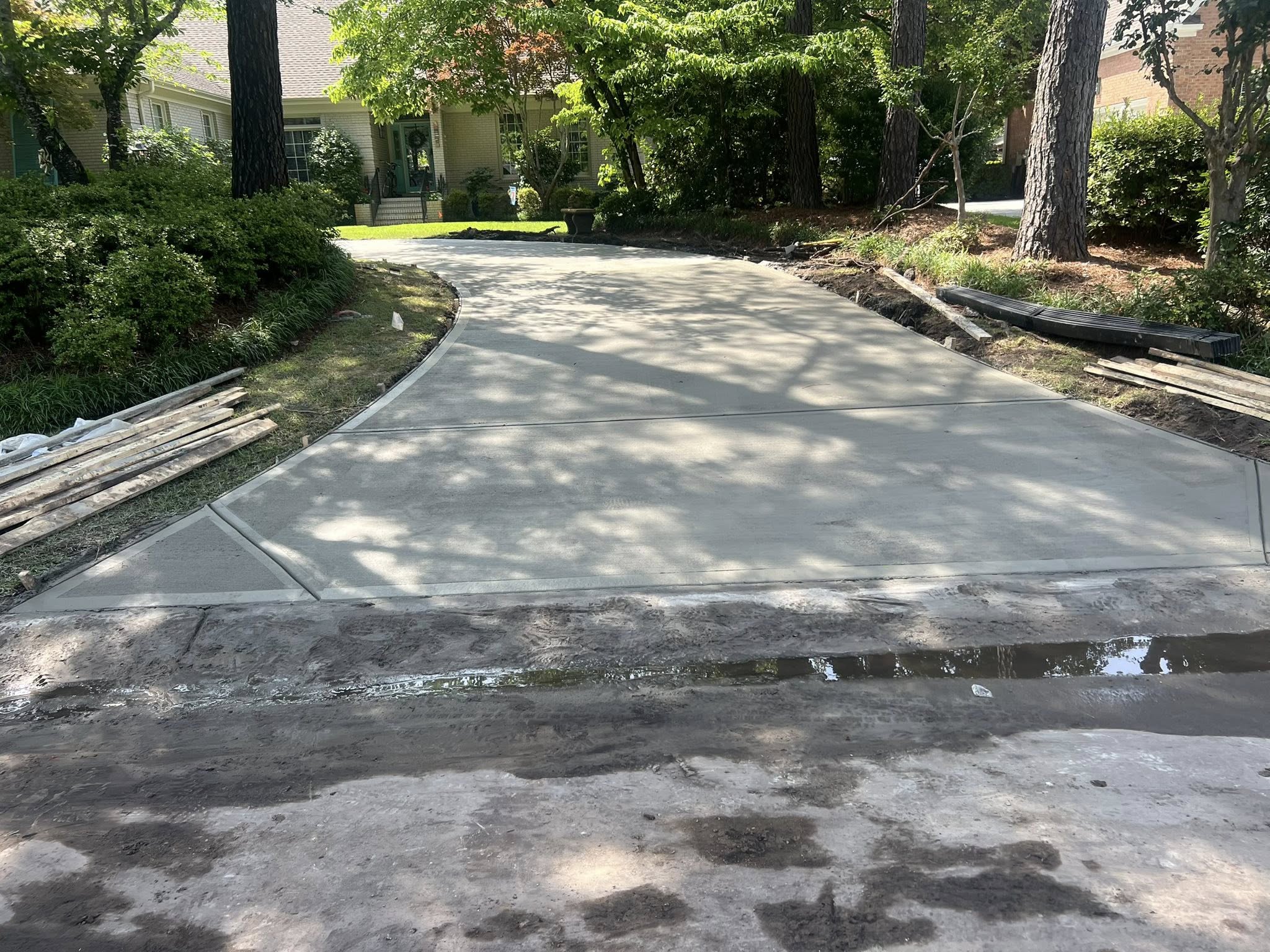
If you live anywhere near the coast in southeastern North Carolina, salt air is touching your concrete right now. It's not something most homeowners think about — you can't see it, you can't feel it, and the damage doesn't show up overnight. But over months and years, airborne salt quietly breaks down the surface of unsealed concrete driveways, patios, garage slabs, pool decks, and walkways. By the time you notice the rough patches, the pitting, or the flaking surface, the damage is already well underway.
This isn't a problem limited to beachfront properties. Salt air travels. Properties a mile or more inland from the ocean, the Intracoastal Waterway, or the Cape Fear River are all exposed — and the closer you are, the more aggressive the damage. For homeowners in Wrightsville Beach, Carolina Beach, and Southport, salt exposure is a year-round reality that requires a different approach to concrete installation and maintenance than what homeowners 50 miles inland deal with.
This article explains exactly how salt air damages concrete, which properties in the Wilmington area face the highest exposure, what the early warning signs look like, and how proper installation and sealing protect your investment for the long term.
What Salt Air Actually Does to Concrete
Concrete looks solid, but at a microscopic level it's porous. The surface is full of tiny capillaries and pores that can absorb moisture from the air and from direct contact with water. In a coastal environment, that moisture carries dissolved salt — sodium chloride from ocean spray, along with other corrosive minerals picked up from tidal water and river estuaries.
When salt-laden moisture enters the pore structure of unsealed concrete, it triggers a cycle of damage that repeats with every weather shift. As the surface dries in the sun, the water evaporates but the salt crystals remain inside the pores. Those crystals expand as they form, creating internal pressure against the walls of the pores from the inside out. Over time, this pressure breaks apart the surface layer of the concrete — a process called salt crystallization weathering. The visible result is spalling (flaking or chipping of the surface), pitting (small holes or rough patches), efflorescence (white powdery deposits on the surface), and a general roughening of what was once a smooth finish.
This process isn't fast enough to notice week to week, which is why it catches homeowners off guard. But it's relentless. Every humid night deposits a fresh layer of salt moisture, and every sunny afternoon bakes it into the pores. Over two to three years on an unsealed surface near the coast, the cumulative damage becomes clearly visible — and by that point, the surface layer is already compromised.
Which Properties in the Wilmington Area Face the Most Salt Exposure?
Not all properties in southeastern North Carolina deal with the same level of salt air. The intensity depends on your proximity to saltwater, whether you're exposed from one direction or multiple, and whether your property has natural windbreaks like tree cover or neighboring structures.
Barrier island properties — highest exposure
Wrightsville Beach and Carolina Beach are barrier islands — narrow strips of land between the Atlantic Ocean and the Intracoastal Waterway. Properties here get salt exposure from both sides. Ocean-facing homes take direct salt spray from wave action and onshore wind. Sound-side and ICW-side homes deal with salt carried across the island and deposited by tidal airflow from the waterway. There is no "protected" side on a barrier island. Every driveway, patio, and garage slab on these islands is in the highest-exposure category year round.
Waterfront harbor properties — triple convergence
Southport sits at the point where the Cape Fear River, the Intracoastal Waterway, and the Atlantic Ocean converge. Properties in the historic harbor district, along the waterfront, and in communities like St. James Plantation are exposed to salt from multiple water sources simultaneously. The constant river breeze carries salt and moisture inland further than many homeowners expect — even properties several blocks from the water in Southport's historic core are affected.
Intracoastal and river-adjacent properties — moderate to high exposure
You don't need to be on the ocean to deal with salt air. Properties in Hampstead along the Intracoastal Waterway corridor, waterfront lots in Castle Hayne near the Northeast Cape Fear River, and properties in Winnabow along the Cape Fear River corridor all face salt exposure from brackish tidal water. The ICW is not freshwater — it's a tidal saltwater channel — and properties within a half mile of it deal with meaningful salt deposition on outdoor surfaces.
Inland properties — lower but not zero
Properties further inland in Wilmington, Leland, and Rocky Point deal with significantly less direct salt deposition, but the ambient coastal humidity across all of southeastern North Carolina still carries trace salt content. The sealing schedule for inland properties can be less aggressive — every two to three years rather than every one to two — but sealing is still recommended as standard maintenance regardless of how far from the water you are.
How to Tell If Salt Air Is Damaging Your Concrete
Salt damage doesn't announce itself with a single dramatic crack. It builds gradually, and the early signs are easy to miss if you're not looking for them. Here's what to watch for on your driveway, patio, garage slab, pool deck, or walkway:
Efflorescence — white, chalky, powdery deposits on the surface. This is salt being drawn out of the concrete by evaporation. It's the earliest visible sign that salt moisture has penetrated the pores, and it often appears within the first year on unsealed coastal concrete.
Surface roughening — areas that were once smooth to the touch start feeling gritty, sandy, or rough. This means the outer layer of cement paste is breaking down from crystal pressure inside the pores. Run your hand across the surface — if it feels like fine sandpaper in patches, salt damage is underway.
Pitting — small holes, divots, or pockmarks forming on the surface. These are localized points where the salt crystallization process has broken through the surface layer. Pitting typically appears after roughening and indicates more advanced damage.
Spalling — flaking, chipping, or peeling of the concrete surface in thin layers. This is the most advanced stage of salt damage. At this point, the surface layer is delaminating from the slab below. Spalling often starts at edges and corners where exposure is greatest and can spread across the full surface if left unaddressed.
Discoloration and staining — uneven darkening, blotchy patches, or a generally dull appearance on a surface that used to look uniform. Salt moisture pulls minerals from inside the concrete to the surface, changing the color. On stamped concrete and colored concrete, this can also cause the color to fade or look washed out in exposed areas while shaded areas retain their original tone.
How to Protect Your Concrete From Salt Air Damage
The good news is that salt air damage is almost entirely preventable with proper installation and a consistent sealing schedule. The concrete itself doesn't need to be a different product — standard residential concrete performs well in coastal environments when it's installed correctly and protected.
Seal the concrete after curing — and reseal on schedule
Sealing is the single most effective defense against salt air damage. A quality penetrating sealer fills the pore structure of the concrete, blocking salt-laden moisture from entering while still allowing the slab to release internal moisture (breathe). At Bullet Concrete Construction, we apply a penetrating sealer to every project as part of the standard installation — not as an optional upgrade.
The sealer doesn't last forever. Foot traffic, vehicle traffic, UV exposure, and weather gradually wear it down. The resealing schedule depends on where your property is:
Barrier island and direct waterfront properties (Wrightsville Beach, Carolina Beach, Southport waterfront, Hampstead ICW-front): Reseal every one to two years.
Near-coastal properties (Wilmington east of College Road, Ogden, Porters Neck, Monkey Junction, Scotts Hill): Reseal every two years.
Inland properties (Wilmington west side, Leland, Rocky Point, Castle Hayne interior, Winnabow interior): Reseal every two to three years.
Start with proper installation
Sealing protects the surface, but the slab itself needs to be built right. A concrete driveway or patio that's poured too thin, without adequate reinforcement, or on a poorly compacted sub-base will develop structural cracks — and every crack is an entry point for salt moisture that no surface sealer can fully protect. Proper thickness (five inches minimum for driveways and garage slabs, four inches for patios), steel reinforcement, compacted gravel sub-base, and correctly placed control joints all reduce the pathways salt can use to penetrate deeper into the slab.
Keep standing water off the surface
Standing water on a concrete surface in a coastal environment isn't just a drainage nuisance — it's a concentrated salt bath. Every puddle that sits on your driveway or patio is depositing salt into the pores for as long as it takes to evaporate. Proper drainage pitch — a quarter inch per foot of fall — ensures water sheets off the surface quickly rather than pooling. This is especially critical on patios and pool decks where flat surfaces can trap water, and behind retaining walls where trapped moisture accelerates both salt damage and hydrostatic pressure.
Rinse your concrete regularly
One of the simplest things you can do — especially on barrier island properties — is rinse your concrete surfaces with fresh water periodically. A garden hose is enough. This washes off the salt deposits that accumulate on the surface before they have a chance to be absorbed deeper into the pores during the next humid night or rain cycle. It's not a substitute for sealing, but it reduces the salt load the sealer has to resist and extends the time between resealing.
What If the Damage Is Already Done?
If your concrete is already showing signs of salt damage, the path forward depends on how far it's progressed. Early-stage efflorescence and light surface roughening can often be addressed by cleaning the surface thoroughly, allowing it to dry, and applying a quality penetrating sealer. This won't reverse the damage that's already occurred, but it stops the cycle from continuing and protects the remaining surface.
If the surface has progressed to active spalling, deep pitting, or widespread flaking, sealing alone won't fix it — the surface layer is already compromised. At that point, full or partial replacement is typically the more cost-effective path. We assess the extent of the damage during our free on-site estimate and give you an honest recommendation on whether the slab can be sealed and maintained or whether replacement is the better long-term investment. If replacement is needed, the new slab gets proper sealing from day one so the cycle doesn't repeat.
Coastal Concrete Needs Coastal Treatment
Living near the water in southeastern North Carolina is one of the best things about this area. But the same salt air that makes the coast feel like the coast is working against every unsealed concrete surface on your property — quietly, constantly, and cumulatively. The damage is preventable, but only if it's addressed from day one with proper installation and a consistent sealing schedule.
At Bullet Concrete Construction, we seal every concrete surface we pour as standard practice — driveways, patios, garage slabs, foundations, stamped concrete, walkways, and pool decks. We build every slab with the compacted sub-base, reinforcement, drainage pitch, and control joints needed to minimize crack entry points. And we advise every homeowner on the resealing schedule that matches their specific location and exposure level.
If you're planning a new concrete project near the coast, or if your existing concrete is showing signs of salt damage and you want to know your options, contact us for a free estimate. We'll assess your property, explain what's happening, and give you a clear plan — whether that's sealing what you have or starting fresh with a surface built to handle everything the coast throws at it.
Explore Our Concrete Services
Concrete Driveways • Concrete Patios • Garage Slabs • Concrete Foundations • Retaining Walls • Stamped Concrete
Serving Homeowners Across Southeastern NC
Related: Why Concrete Cracks in Coastal North Carolina (And How to Prevent It) — covers sub-base compaction, control joints, drainage, and the other installation factors that prevent cracking in our climate.