
Why Concrete Cracks in Coastal North Carolina (And How to Prevent It)
By Bullet Concrete Construction | Wilmington, NC | February 15, 2026
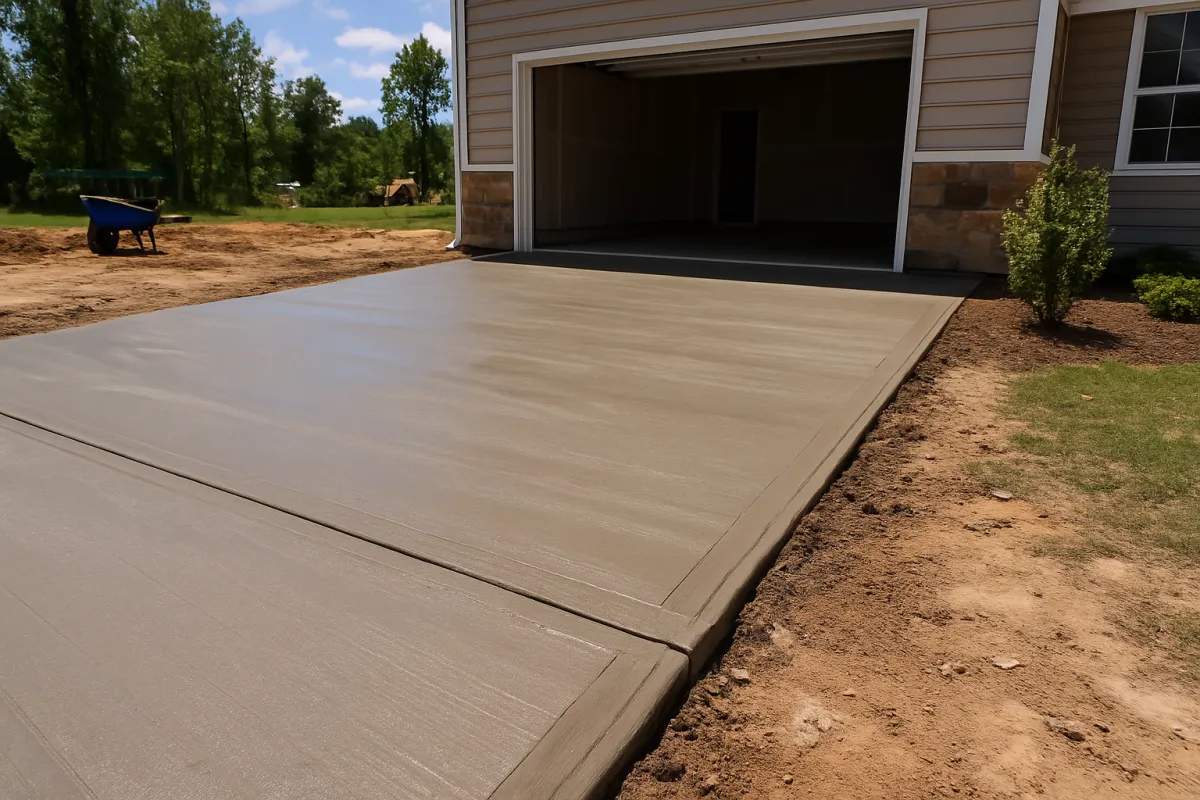
If you've lived in southeastern North Carolina long enough, you've seen it — driveways with cracks running through them a few years after they were poured, patio slabs that have shifted and separated, garage floors with spider-web fractures spreading from the center. Cracked concrete is one of the most common complaints homeowners have in the Wilmington area, and most people assume it's just what concrete does over time. But here's the truth: concrete doesn't crack because of age. It cracks because something went wrong during the installation — and in coastal North Carolina, the conditions that cause those failures are more aggressive than in most parts of the country.
This article breaks down the specific reasons concrete cracks in our area and what a proper installation looks like when it's built to handle coastal conditions. If you're planning a new concrete driveway, patio, garage slab, or foundation — or if you're trying to figure out why your existing concrete is failing — understanding these causes will help you make a better decision on your next project.
Wilmington's Sandy Coastal Soil Shifts More Than You Think
The soil across most of New Hanover, Brunswick, and Pender Counties is predominantly sandy. Sandy soil drains fast — which sounds like a good thing — but it also compacts poorly and shifts under load when it hasn't been properly prepared. If a concrete slab is poured directly on loose or poorly compacted sandy soil, the ground beneath it will settle unevenly over time. When one section of the sub-base drops even slightly while the rest holds, the slab flexes in a way it wasn't designed to handle. That flexion creates stress cracks, and once a crack starts, water gets in and accelerates the damage.
This is especially common on properties in Carolina Beach and Wrightsville Beach where the soil is almost pure sand, and in newer subdivisions in Leland and Hampstead where fill dirt was brought in during site development and may not have been compacted to the standard that concrete requires.
How to prevent it
The fix is proper sub-base preparation — and there are no shortcuts. Before any concrete is poured, the existing soil needs to be excavated to the correct depth, a layer of compactable gravel base material needs to be spread evenly, and that base needs to be mechanically compacted with a plate compactor or roller to create a stable, uniform surface. This is the single most important step in any concrete installation, and it's the step that gets skipped or rushed most often by contractors trying to move fast. At Bullet Concrete Construction, sub-base compaction is built into every project we do — it's not an add-on or an upgrade. It's the foundation of the foundation.
Water Is the Biggest Enemy of Concrete in Coastal NC
Southeastern North Carolina gets an average of 55 to 60 inches of rain per year — well above the national average. On top of that, the water table across much of the Wilmington area sits just a few feet below the surface, and in low-lying areas like Winnabow and parts of Castle Hayne along the Northeast Cape Fear River corridor, it can be as shallow as two to three feet during wet months.
When water sits under, around, or on top of a concrete slab without anywhere to go, multiple failure modes kick in. Water beneath the slab erodes the sub-base and creates voids that cause settling and cracking. Water pooling on top of the slab penetrates the surface through micro-pores and, during temperature swings, expands and contracts — widening hairline cracks into structural ones. Behind retaining walls, trapped water creates hydrostatic pressure that can push the wall forward until it leans, cracks, or collapses entirely.
How to prevent it
Drainage has to be addressed from every angle. The slab itself needs to be poured with a slight pitch — typically a quarter inch per foot — so water sheets off the surface rather than pooling. The sub-base beneath the slab needs to be gravel, not dirt, so any water that reaches the base layer drains through rather than sitting against the bottom of the concrete. On garage slabs and foundations, a vapor barrier between the gravel and the concrete prevents ground moisture from wicking up through the slab. And on retaining walls, drainage gravel backfill with weep holes or a perforated drain pipe at the base is essential to relieve the water pressure that causes wall failures.
Missing or Poorly Placed Control Joints
All concrete shrinks slightly as it cures and hardens — that's a natural property of the material, and it happens on every pour regardless of climate. The issue is that when concrete shrinks, it creates internal tension. If that tension doesn't have a planned relief point, it finds its own — and that shows up as a random crack across the surface of your driveway, patio, or garage floor.
Control joints — the straight grooves you see cut into the surface of a properly poured slab — are intentional weak points that direct any shrinkage cracking into a planned, straight line instead of a random fracture. They're not decorative. They're structural, and the spacing, depth, and placement matter. A control joint that's too shallow won't work. Joints spaced too far apart leave uncontrolled sections that are likely to crack on their own. This is one of those details that separates a professional concrete driveway or patio pour from a budget job that looks fine on day one and cracks within a year.
How to prevent it
Control joints need to be cut at the right depth — typically one-quarter the thickness of the slab — and spaced at intervals based on the slab dimensions and thickness. The general rule is that the spacing in feet should not exceed two to three times the slab thickness in inches. So a five-inch driveway slab should have control joints no more than 10 to 15 feet apart. We calculate joint placement on every project based on the actual slab dimensions and expected load, not a one-size-fits-all spacing.
Salt Air Exposure Accelerates Surface Deterioration
Properties closer to the ocean, the Intracoastal Waterway, and the Cape Fear River deal with airborne salt that settles on concrete surfaces constantly. Salt is corrosive — it breaks down the surface layer of unsealed concrete over time, causing spalling, pitting, and rough patches that worsen with each season. This is especially aggressive on barrier island properties in Wrightsville Beach and Carolina Beach where concrete is exposed to salt from both the ocean side and the sound or river side, and on waterfront properties in Southport where the Cape Fear River, Intracoastal Waterway, and Atlantic Ocean converge.
How to prevent it
Sealing the concrete after the initial cure is the primary defense against salt air damage. A quality penetrating sealer blocks moisture and salt from entering the pore structure of the concrete while still allowing the slab to breathe. We seal every project as part of the standard installation, and we recommend resealing every two to three years — or every one to two years on barrier island and direct waterfront properties where salt exposure is most intense. For stamped concrete and colored concrete, sealing also protects the color and pattern from UV fading, which is a secondary benefit in a climate with as much direct sun as southeastern North Carolina gets.
Pouring Too Thin for the Intended Load
A concrete slab that's too thin for what it needs to carry will crack under stress — not immediately, but over time as repeated loading fatigues the material. A four-inch patio slab is fine for foot traffic and outdoor furniture. But that same four-inch thickness under a driveway carrying daily vehicle traffic, or a garage slab holding two trucks and a workshop full of equipment, is a failure waiting to happen. We see this frequently on properties in Rocky Point and Castle Hayne where homeowners built detached garages or workshops and the original slab was poured too thin for the actual use.
How to prevent it
Thickness needs to match the load. We pour patios at a minimum of four inches, driveways and garage slabs at a minimum of five inches, and heavier-use slabs — boat storage, equipment pads, workshop floors — at six inches or more with rebar reinforcement. Getting the thickness right from day one is far cheaper than tearing out a failed slab and replacing it later.
The Bottom Line: Most Concrete Cracking Is Preventable
Concrete doesn't fail because of bad luck. In coastal North Carolina, it fails because of inadequate sub-base preparation, poor drainage planning, missing or poorly placed control joints, lack of sealing, or insufficient thickness for the intended load. Every one of those causes is preventable during installation — and that's what separates a concrete job that lasts 30 years from one that starts cracking in three.
At Bullet Concrete Construction, we build every project — from driveways and patios to garage slabs, foundations, and retaining walls — with the specific conditions of southeastern North Carolina in mind. Proper excavation, compacted gravel sub-base, steel reinforcement, correctly placed control joints, drainage pitch, vapor barriers where needed, and a protective seal coat on every surface. That's not an upgrade or an add-on. That's how we pour concrete, every time.
If you're planning a concrete project in the Wilmington area — or if your existing concrete is showing signs of failure and you want to know whether it can be repaired or needs to be replaced — contact us for a free estimate. We'll assess your property, explain exactly what the project involves, and give you a detailed written quote with no obligation.
Explore Our Concrete Services
Concrete Driveways • Concrete Patios • Garage Slabs • Concrete Foundations • Retaining Walls • Stamped Concrete
Serving Homeowners Across Southeastern NC
© bulletconcreteconstruction.com 2026 All Rights Reserved | Privacy Policy | Terms & Conditions | Bullet Concrete LLC